Stable Profile
Proportions, facial structure, hair characteristics, comfort constraints and lifestyle requirements.
Product Thinking · Personalisation · Human-in-the-Loop AI
Can highly subjective appearance decisions become a repeatable system by combining the person, the moment, the context and real-world feedback?
A personal experiment evolved into an explainable recommendation and learning system.
01 / The distinction
A look can be attractive yet feel wrong because of proportion, maintenance, context or identity. I reframed personal style as a decision problem rather than a moodboard exercise.
02 / Core model
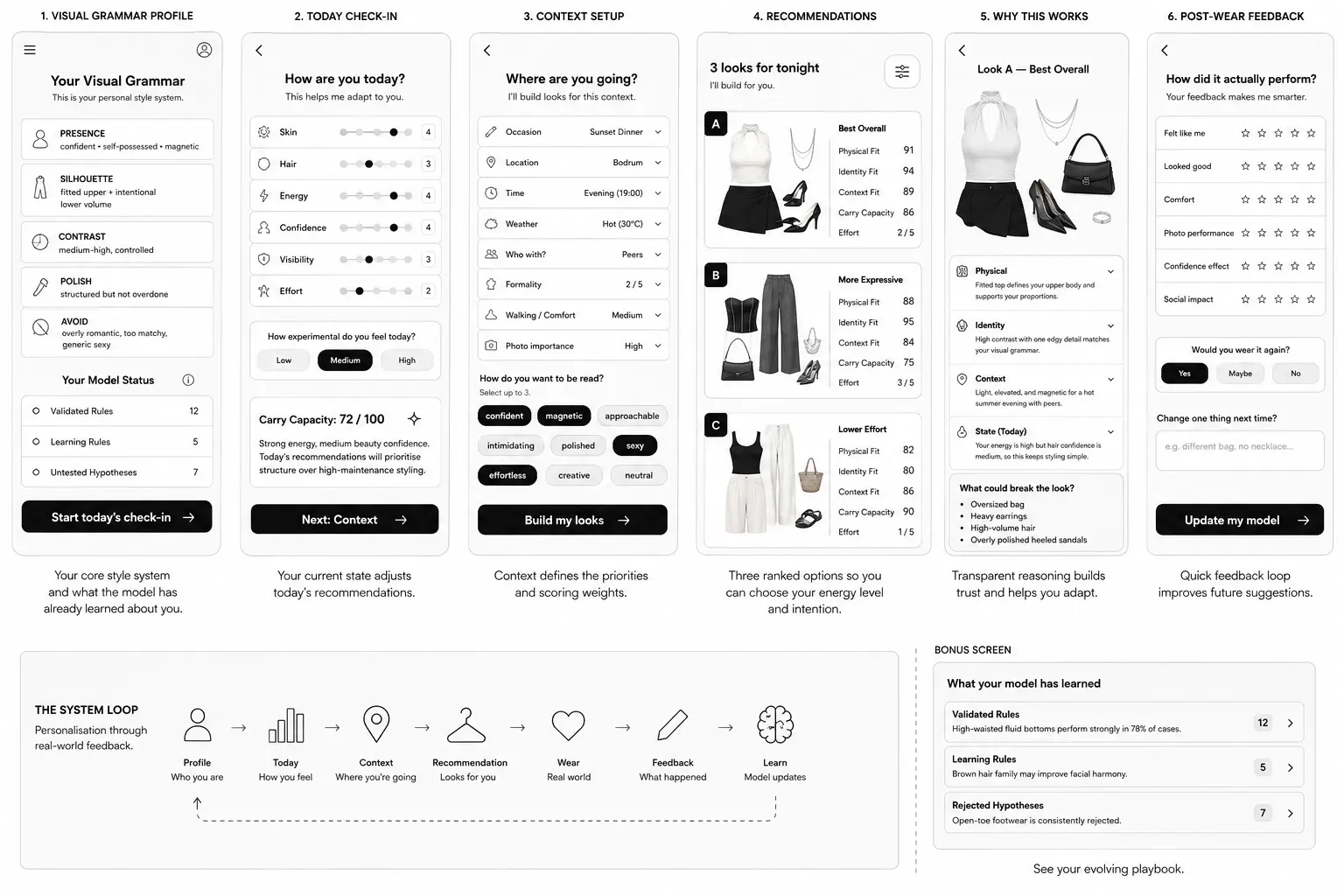
03 / Personalisation
Proportions, facial structure, hair characteristics, comfort constraints and lifestyle requirements.
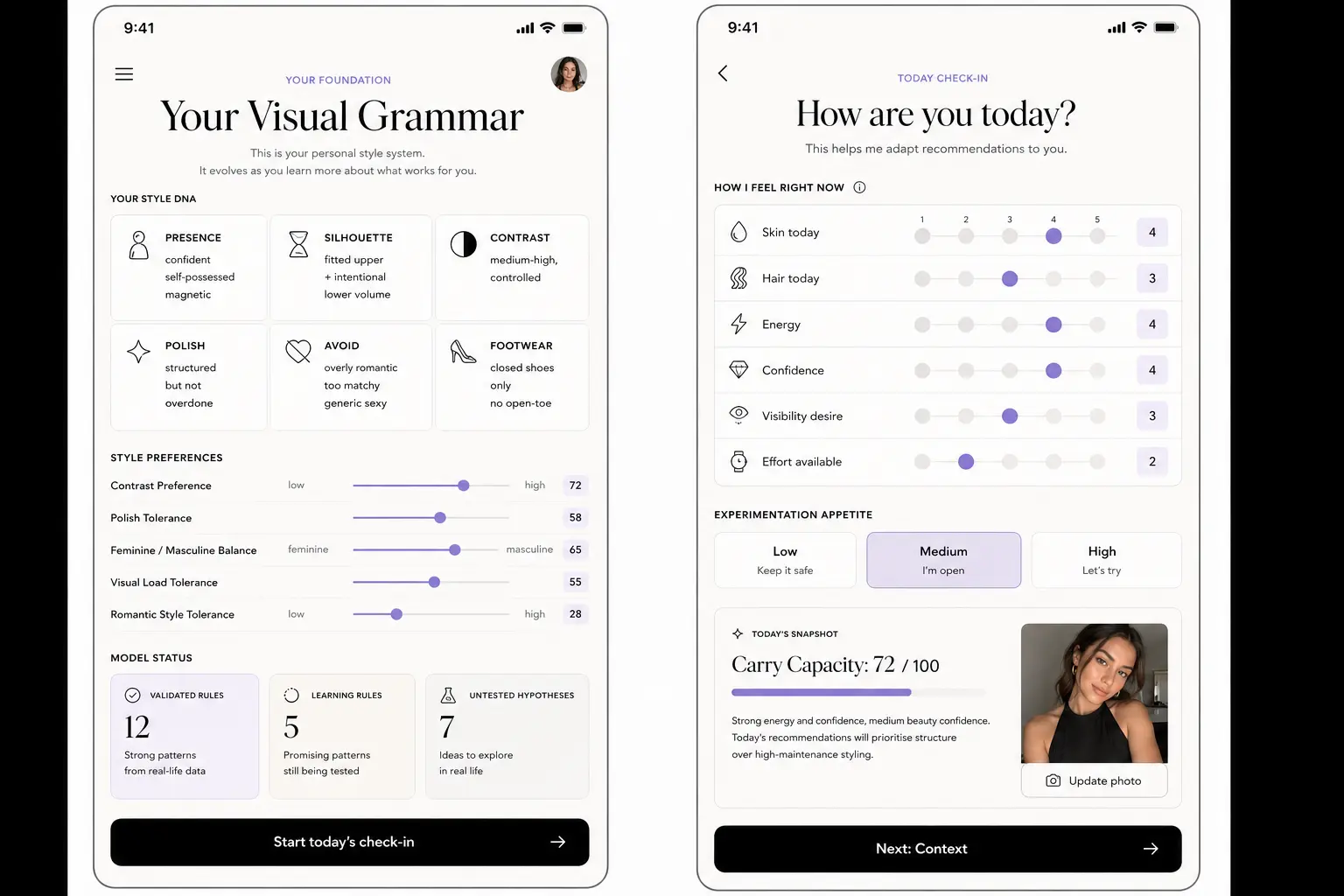
Personal rules about silhouette, contrast, balance, detail and identity—without reducing style to one label.
Skin and hair satisfaction, energy, confidence, visibility, effort and appetite for experimentation.
Occasion, location, weather, formality, movement, photo importance and desired impression.
Available pieces tagged by fit, visual weight, statement level, comfort, season and identity fit.
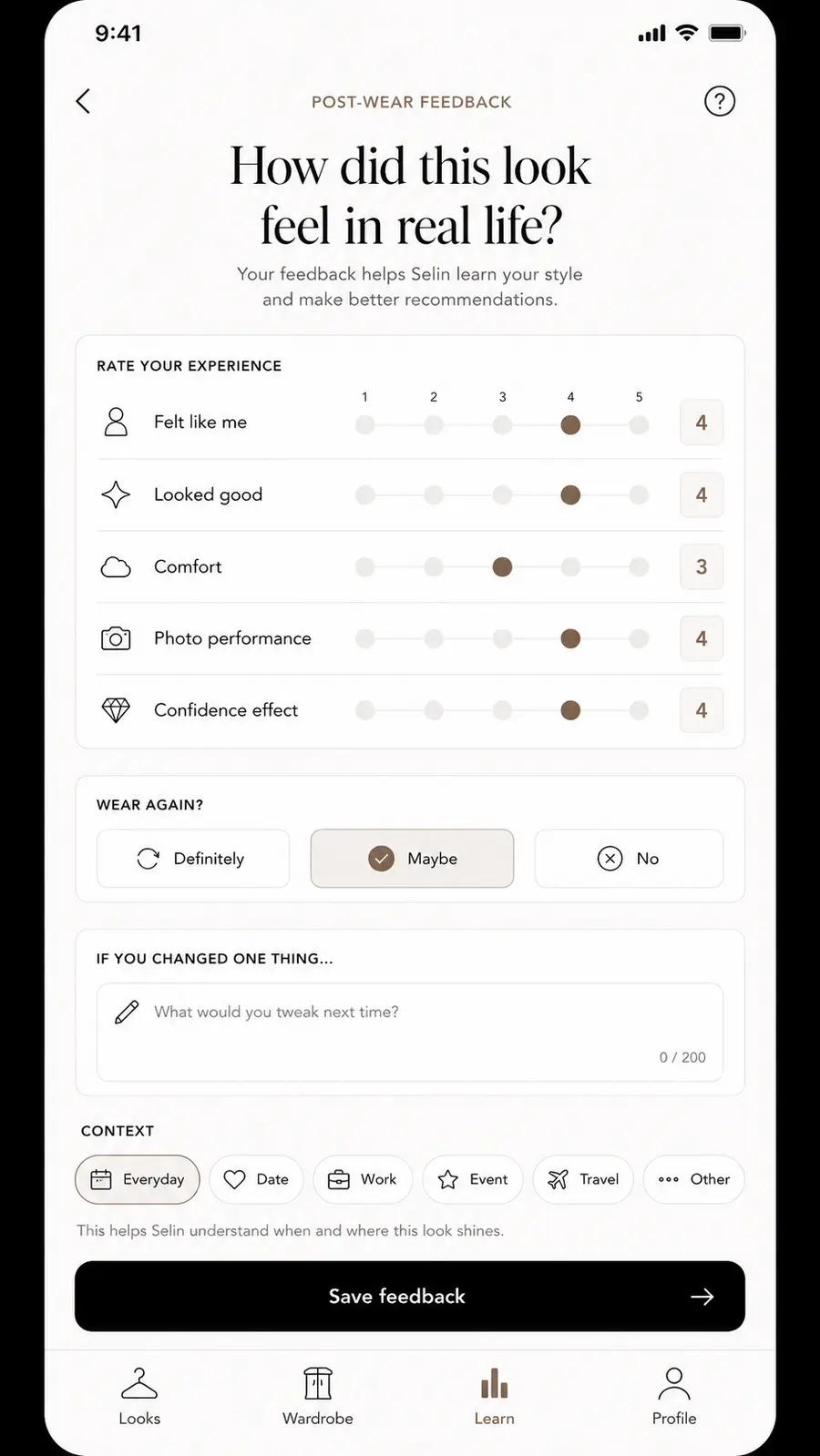
Post-wear ratings compare the recommendation with lived experience and update the model.
How much complexity, experimentation or maintenance is appropriate for this person today?
04 / Decision Engine v0
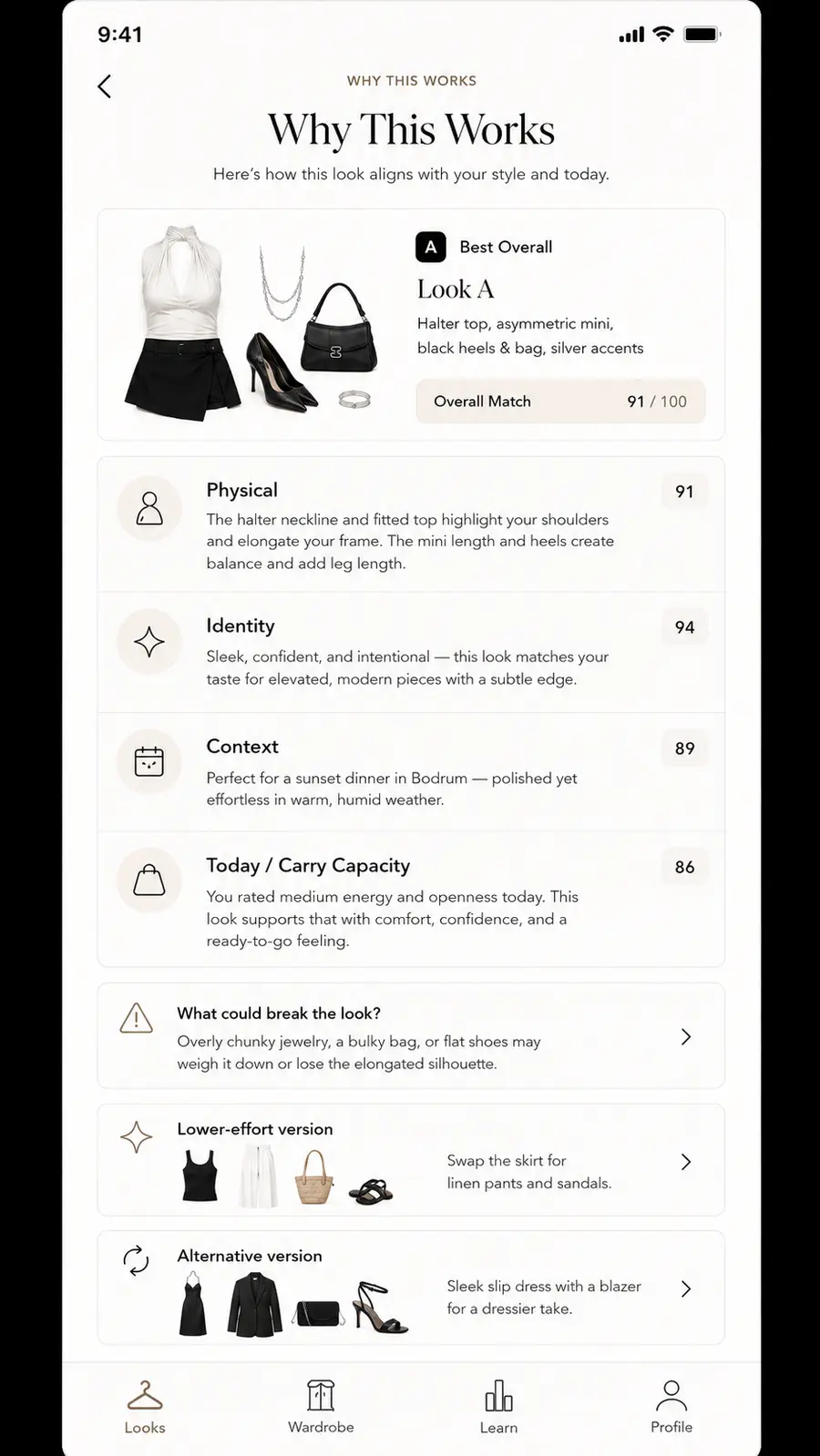
Does the look support the person’s proportions?
Does it feel like the person—not merely look attractive?
Is it right for this place, occasion and desired impression?
Is the complexity appropriate for today’s state?
Do the elements reinforce one another?
What maintenance, styling and discomfort does it require?
Unavailable items, unsuitable dress code, weather conflict or a comfort limit that cannot be negotiated.
Visual clutter, weak waist definition or patterns that previously performed poorly—but may still work in a new combination.
05 / Recommendation design
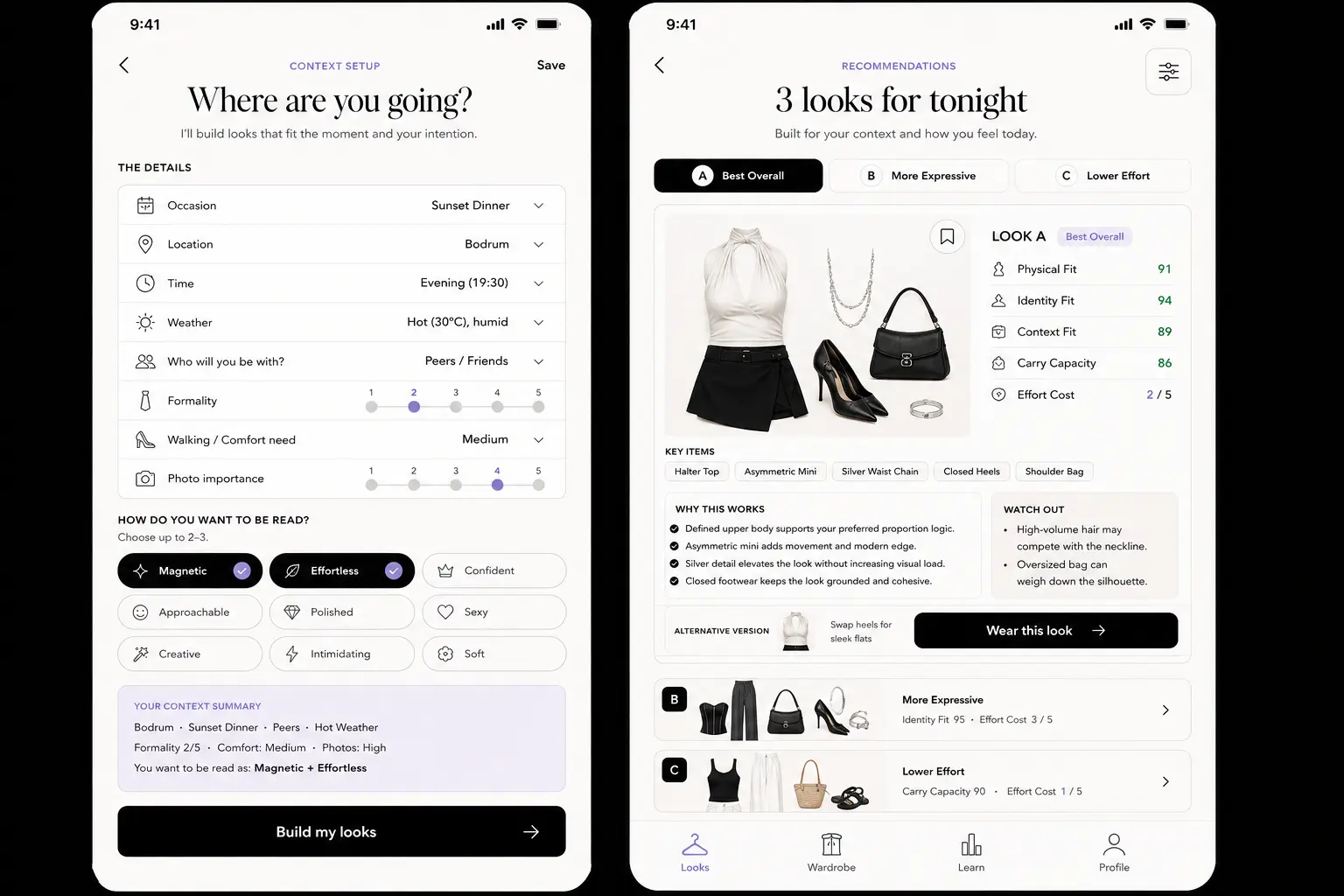
06 / Prototype
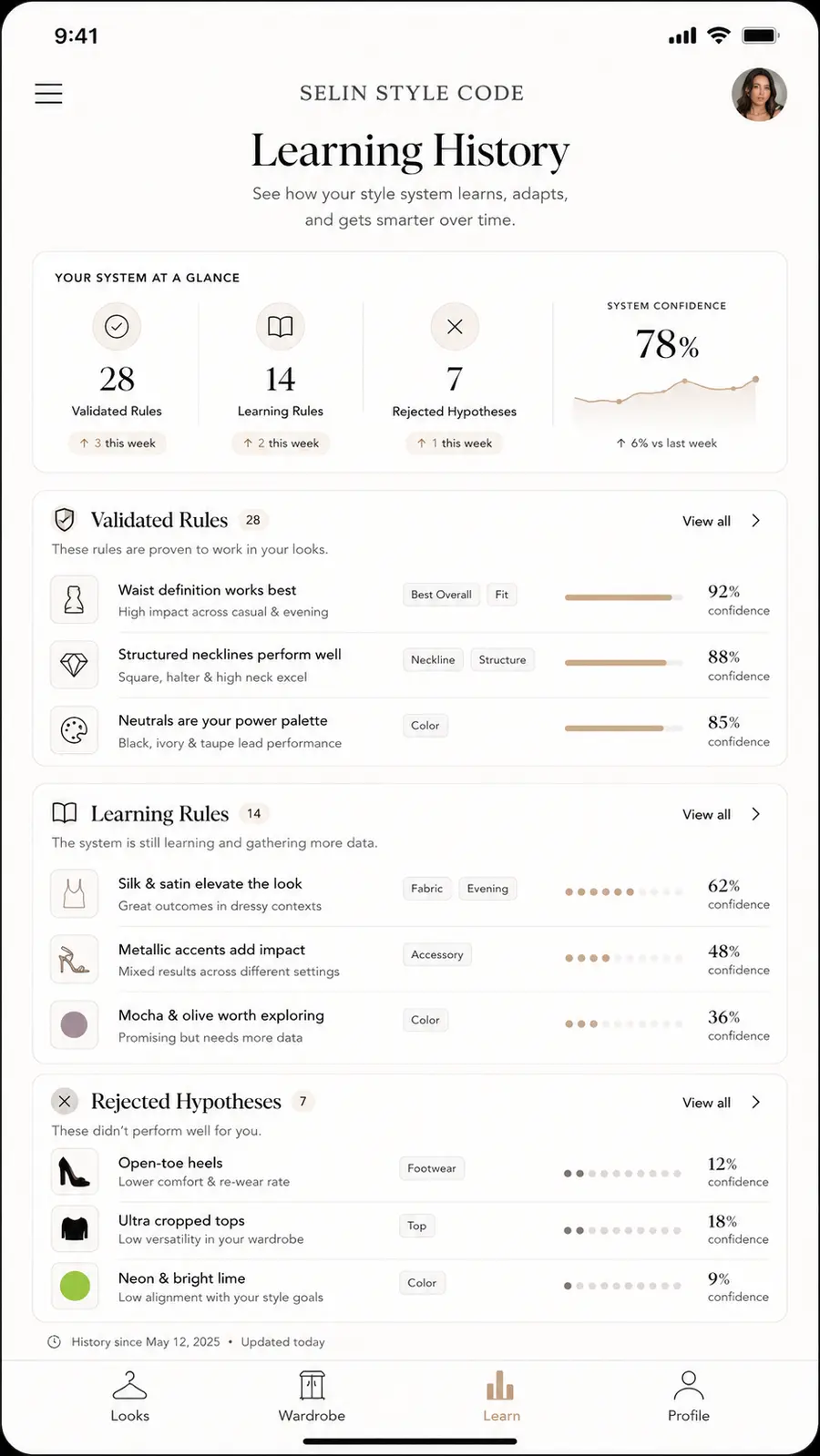
The high-fidelity mobile concept uses a Modern Editorial direction: serif typography, neutral layouts, restrained colour and visible reasoning instead of dashboard complexity.
07 / Evidence confidence
A visual or theoretical hypothesis.
Some evidence exists; more real-world use is needed.
A rule has performed consistently across repeated wear.
08 / First validation
Romantic texture performed when balanced by sportier and more graphic elements.
Structured open upper body + simple short + one waist detail supported the emerging visual grammar.
A clean silhouette and defined upper body performed without high visual complexity.
09 / Next phase